Thursday, 2 June 2016

Week 13 - Be little? Think big.

Nowadays, since sustainability has become the major topic around the world, sense of sustainable and act sustainable is significant for human beings. Not only for adults, but also for kids and youth, if everyone keeps thinking sustainably, every single move they make can potentially change the world.

Planting the sense of sustainability in early ages is therefore needed. In the modern era, kids are having more chance to watch TV and movie, advertisements and games, being exposed to heaps of information from different kinds of media. Firstly, we have to admit that young can receive information very fast. Everything occurs on media can be received by kids in a short amount of time. Therefore social media plays an important role in developing kids' values, world-views and personalities.

By thinking that way, planting the right value and positive information in young's head is easier. It is not uncommon that nowadays in movies, Tv or commercial advertisements, renewable energy, hygienic vehicle have become the norms. Children's perception on sustainability has already been rooted through the Tvs and movies they have been watching. 
A cartoon episode "Tote Life", talking about the bears failed to bring reusable bags, trying to get all the bags they can find to create a tote bag. It significantly promotes the idea on sustainability to young kids.
Following this thought, why can't we just root the sense of sustainability deeper in their minds? Nowadays, some tv shows including cartoons and dramas have already started to promote the idea by adding in episodes and elements that are related to the sustainable topics. This is a brilliant move, that when kids are having fun with the cartoons or shows, at the same time they are receiving the ideas.
A book for kids showing sustainable technologies in the illustration.
Not only on social media, but also on story books that the revolution is taking place. It is claimed that "You're never too young to become a sustainable urbanist". The new book is called Bicycles, Airships, and Things That Go! , which is intended for children aged from 3 to 8. In the book, it tells a story about a family travels to a science museum by bike, airship, cargo scooter, high-speed train and solar-powered ferry. On the way, they encounter all different kinds of sustainable, environmental friendly technologies, including wind turbines, wave energy machines, portable solar briefcases, green infrastructure, street recycling, permeable pavement and solar-powered street lights. It is certainly nothing like the fairy tale stories we read when we were young. However, kids seem to be loving the technological stories.

It is a great way to root the thinking of sustainability in children's mind. There is no doubt that we need more of these resources for children. Instead of all kinds of deceptive advertisement and meaningless soap drama on social media, this topic is certainly a revolution on social media. 


Resources:
http://www.sustainablebrands.com/news_and_views/stakeholder_trends_insights/matthew_yeomans/how_kids_pop_culture_helping_shape_early_

https://nextcity.org/daily/entry/urbanist-childrens-books-about-cities

Tuesday, 31 May 2016

Week 13 - Let it be fun!

The concept of sustainability has penetrated in people's daily lives - sustainable food, renewable energy or clean energy, sustainable grey water treatment, rainwater collection and reuse, as well as green infrastructure. Despite all these living essentials, entertainment is like a "bonus" for daily lives. It is not as essential as food and water use, yet the demand for proper entertainment is higher and higher nowadays. So, how could we integrate the idea of sustainability into our entertainment events, and make it innovative and interesting?

When I thought of sustainable events before, I would probably think about those local markets that sells organic or recycled sustainable goods. Just as the Bluestem Earth Festival, which features earth-friendly activities, workshops, live demonstrations, entertainment, local food and children's activities to the public. The Bluestem Earth Festival is an annual event, it provides the chance to promote eco-friendly products, educates the community on environmental friendly practices, and justice and peacemaking.

I personally think this kind of even is great. As it is fundamentally an entertainment, providing joy and fun to the public, at the same time promoting sustainable product to support the environment. As well as, it provides products that are organic and free from chemicals, which means consumers can have a better well being by using sustainable goods, or eating organic food. Sustainability as a topic becomes easily acceptable to the general public. As one of the vendors says, "It feels good to eliminate chemicals from people's lives and use products from the earth to take care of yourself." For me, the only negative thing on this event is it takes place annually. It is far away from enough. Yet for what I know, in Australia, there are more and more similar markets take place weekly for local residents, only in smaller scales. I guess they also need more support from institutions and the society to expand in scale.

This was the only thing I could think of when we say sustainable entertainment, until I came across to this interesting piece of news.

It is about an outdoor music festival - The Pickathon Music Festival, in which the concept of sustainability is the top priority. The stages, which is called treeline stage, are built from recycled or recyclable materials. Bottled water and plastic utensils are eliminated, as well as providing EcoShuttle service between the field and the grounds. The first step was thinking about how to eliminate bottled-water. Pickathon decided to truck in drinking water to those who bring their own cup for free. As well as, instead of plastic cups, the festival provided a special stainless steel pint mug, which can be used for water as well as beer purchase. The cups are therefore, being reused year after year, without creating extra waste.

To me the most extraordinary part was on the stage building. The stage named Tree-Line Stage was essentially a stage built with recycled or recyclable materials. It was designed based on the four principles:

  • To continue Pickathon's philosophy of high-experimental impact coupled with low-environmental impact
  • The site was to be returned to its found condition, an idyllic meadow leaning gently towards the horizon of the Cascades
  • Costs to be kept to an absolute minimum
  • The performance area needed to be a completely new design, every year, in order to keep the concepts of low-impact design at the front of the community's mind.


The video below tells one of the stories of Tree-line Stage:


The news shocked me so much, in a good way. When we think about outdoor music events, it is not hard to relate to the image that after the event there are waste everywhere on the ground, with the stage left at the place, looking absolutely nothing matches the natural environment around. In Pickathon, the idea on sustainability can be implied so well, that it entertains the society at the same time minimising its environmental impact. It is definitely a new way to promote sustainable entertainment. We definitely need to extend this idea further, to a larger scale, to the whole society. Of course, supportive governments and public is the key to make this sustainable entertainment idea vital. 


pickathon, pickathon music festival, Portland State University, Diversion Design/Build Studio, diversion architecture, what is diversion architecture, green design, sustainable design, tree line stage
Tree-line Stage at Pendarvis Farm


Resources:
http://inhabitat.com/how-diversion-architecture-will-make-outdoor-concert-festivals-more-sustainable/
http://www.theherald-news.com/2016/05/21/bluestem-earth-festival-delivers-sustainable-chemical-free-products/abhq87q/
https://www.youtube.com/watch?v=lgsT2oNsYP4

Wednesday, 25 May 2016

Week 12 - Futuristic? Realistic!


Australia has always been a country that is highly aware of the importance on sustainability development. Therefore, Australian architecture is pioneering on sustainable aspect on the world.

Reading through the news, a very interesting article becomes an eye-catcher. It is about the next generation of sustainable buildings that are improving Australian cities, in order to promote the city wellness and prevent environmental impact.

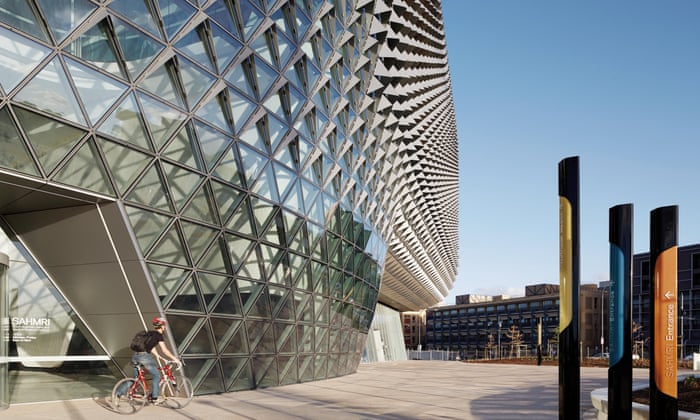
One of the most extraordinary one is the South Australia Health & Medical Research Institute(SAHMRI). 

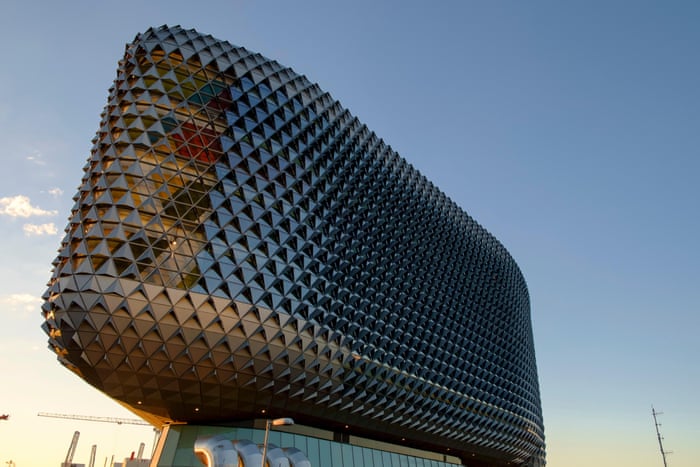
Located in Adelaide, SAHMRI is a $200m project which awarded Sustainable Architecture at the 2014 SA Architecture Awards. As shown in the photos attached, one of the most extraordinary design was the façade of the building. 

Glass eco-façade of SAHMRI, most essentially, aims to provide a balanced daylight level in the building in order to reduce energy consumption on daytime artificial lighting. At the same time, it was designed according to the studies on circadian rhythms in order to provide circadian health. 
South Australian Health & Medical Research Institute. Façade design aims to balance daylight level in the building.
Façade was inspired by the circadian rhythms studies.
The solar-responsive skin is working quite well.  The diagrid façade system with designed and orientated sunshade incorporate with the high performance low E glass, not only responses to daylight and sunlight, but also heat load, glare and wind, as well as providing sufficient views.

In terms of material selection, the structure is made of structural steel, which can span up to 40 meters without additional support. It therefore contains less embodied energy than aluminium systems.

The architects has also considered carefully about the programmatic arrangement in relation to façade design and building form, in order to optimise the thermal and lighting efficiency of the building.

All of these designs including the façade irregular sunshade design was made by parametric design programs, or as we all know, BIM. Integrating architectural design and computational programs can easily analyse up all the performances of the actual building at design stage. The designs are incredible in terms of their performance on sustainability, as well as building up a new landmark in Adelaide. Although it looks futuristic in form and shape, would it potentially become a trend in architecture in the coming future?

No matter what the answer is, SAHMRI has a profound impact on sustainable architecture in Australia. As architecture contributes heaps to environmental impact from built environment, it is significant to enhance the sustainable design in all buildings being designed for Australia in the future.


Resources:
http://www.theguardian.com/sustainable-business/2016/may/20/environmental-design-we-design-the-stuff-you-feel-not-the-stuff-you-see
http://wp.architecture.com.au/news-media/iconic-and-innovative-sahmri-stitches-up-the-competition-at-sa-architecture-awards/#sthash.JoSWGuap.dpbs
http://architectureau.com/articles/beyond-parametricism-transforming-the-city-with-sustainable-design/

Tuesday, 24 May 2016

Week 12 - Even Fashion is sustainable?

What does it mean of wear sustainably?  Do we have the image in mind that there is a woman in a crumpled recycled-paper or newspaper dress which looks nothing pleasant at all?

Well, it used to be like that. Sustainable clothing used to mean dressing like a "1960s flowery bird" with clothes that are resembled recycled papers, available in limited stores. Because of that situation, sustainable clothing became an object that no one wants to touch as consumers did not want to sacrifice style for sustainability. However, nowadays sustainable clothing means nothing like that anymore.


Traditional sustainable clothing.
Sustainable Clothing now which makes textile from renewable wood fibres
It is said that it has finally come to a new era that sustainability becomes a trend in fashion design. Nowadays, sustainable fashion product is much easier to find, some brands are even using sustainability as their brands' concept. And the products from these brands, compared to before, have been improved a lot in terms of aesthetics. Style and sustainability is finally co-existing in the fashion industry.

To achieve sustainability in their designs, designers are using materials that are safe and can be perpetually cycled. Of course, sense of beauty has to be embedded in the products. Not only for those self-design brands, some of the luxury brands has started to put fashion and sustainability as the priority of their products. For example, Stella McCarney and Maiyet. Also, as shown in pictures above, although the designers are choosing sustainable/ recyclable materials on clothing, for example, renewable wood fibres, it does not mean that it has to look like the "old fashion" way of the paper-bag kind of look.

In addition, sustainability in fashion is about "safeguarding the indefinite lifespan, diversity and productivity of our biological systems", means it is putting the endurance of environment's capacity at the first consideration.

It is not a particularly working sustainable solution for me, as I think that there are always barriers. Eco-fashion has a problem that the price would be higher than normal clothing. And consumers still tend to buy a $15 tee shirt which is the latest trend instead of a $45 one which is made of well crafted organic cotton. 

It is a significant barrier based on the consumers' behaviour. The fashion trend is generally moving very fast. Not like a luxury good field, for example, cars or buildings, in which design trend is moving rather slow. Consumers want their clothing fast and cheap, regardless the material and production process. It's probably because of the lack of information to the general public. For example, consumers might spend a few more cents on an organic fruit because they know it is good for their health. Yet they are not fully aware of the fact that the possibilities of the cheap products be exposed to toxic chemicals during the production process. 

Also, from the manufacturers' aspect, it is always the best to use the quickest and cheapest way to produce to improve their productivities. Even if the designers try to find the most sustainable ways to produce, manufacturers would finally turn down their proposal as it takes time and it is not productive. As a result, the production scale of sustainable products is still remaining small.

Maybe, it needs to be informative for the society to understand the importance to wear sustainably. It can be predicted that as long as the demand goes up with appropriate profit, the manufacture issue can be resolved naturally. So, let there be more education and promotion, let the society be healthy not only from the "inside", but also from the "outside".


Resources:
http://www.dispatch.com/content/stories/life_and_entertainment/2016/05/21/1-sustainable-clothing-signals-design-focus.html
https://www.broadsheet.com.au/sydney/fashion/article/green-new-black
http://fashionista.com/2016/05/fashion-sustainability

Sunday, 22 May 2016

Week 11 - Retackeling Unwanted - Turning Contamination into Clean Water


As an extended thinking from the last entry, let's talk about clean water solutions.

In Los Angeles, it is well known that after a good amount of raining, surfers would stay out of water regardless the good waves. If they had enough bravery to be in the water for a while, they would probably be suffered from pinkeyes, a fever or diarrhea, as the water would be seriously polluted from stormwater runoff. There will be weird and funky smell and different kinds of rubbish and oils in the water. The severe stormwater pollution is affecting drinkable water as well.

Although our planet is mostly covered by water (roughly 70%), our drinkable water becomes scarcity in urbanisation progress. Poor stormwater management raises issue on contamination of drinking water. It has become an important action to prevent stormwater runoff located anywhere near drinking water sources.


Los Angeles launched a new solution in sourcing drinking water. It is called Stormwater Capture Master Plan. The project aims to keep rainwater runoff away from clean water, at the same time, 
turning polluted/stormwater, as a significant resource, into drinkable water.


Diagram of  Stormwater Capture Mater Plan in Los Angeles.

Integrated treatment on stormwater and water supply including a few design strategies. The first step is to capture and filter stormwater onsite from impervious areas. This includes some small rain gardens to create complex bioretention. Then, the simplest output is onsite direct use of filtered stormwater for irrigation. This is the smallest scale treatment in the plan. Larger scale including collect stormwater in urban area and redirect to underground infiltration galleries and bio-infiltration basins for treatment and then reuse for irrigation. Although there is still no further actions on treating stormwater into potable water yet, the principle inside the plan is making it wait-worthy.

In fact, stormwater collection and reuse for irrigation is spreading out and pretty common in Australia nowadays. What is uncommon is the thought on treating grey/black water into potable water.


Stormwater pit in normal residential gardens in Australia. (Photo source by author)


Actually, similar idea has been pioneered before Los Angeles. The idea was inspired by the turning sewage into potable water technologies in Wichita Falls, Texas. Wastewater treatment including putting additional chemical and biological processes before mixing the recycled water into regular potable water treatment. In 2013, Wichita Falls has spent $14 million on plant to start turning wastewater into drinking water and started to distribute to daily use. It was rather successful.

This is an incredible step in urbanisation era. Treating polluted water, at the same time resolving the issue on water shortage. The biggest concern today is the financial barriers. By introducing the new treatment, new technologies are necessary. Investments on new technologies would be huge. As well as, to make it prolonging, extra payment on daily water bills might be necessary. Would the citizens be willing to pay for the extra? How to resolve the financial issue? These are the issues left out behind the beautiful vision in the plan. It would be great if the technologies and the extra payment could be balanced. Also, inform the public about the value on new technologies. Make it transparent and informative, the public would potentially see how the benefits outweigh the extra bits of money.


Resources:

http://www.nytimes.com/2013/04/08/us/los-angeles-plan-to-turn-pollution-into-drinking-water.html?_r=0
http://www.nytimes.com/2013/02/08/us/potable-water-reuse-ideas-go-forward-in-texas-despite-concerns.html
http://www.awra.org/meetings/LosAngeles2015/doc/PP/powerpoint/SPR_S1_Villegas_Rafael.pdf
https://kbhenergycenter.utexas.edu/2013/04/10/stormwater-as-a-source-of-drinking-water-the-example-of-la/
http://www.sustainablebrands.com/news_and_views/products_design/julia_stehlin/sustainable_water_management_facilitating_global_access

Tuesday, 17 May 2016

Week 11 - Mitigating Impact from Urban runoff

Have you found that chance of flooding after raining in urban area is increasing? Have you found that after raining, rivers, lakes and all sorts of waterway becomes turbid?

Of course, yes, we are familiar with these. What are the causes of these issues? Some might blame the factories discharging polluted water, some might blame the tossers tossing litters in waterways. They are all true. However, there might be one more culprit that we have never thought of - urban runoff.

Urban runoff, or in the other words, stormwater, is the water, usually rain water or irrigation water, that drained off from roof, urban land or road in urban area. If it is merely rainwater collected from the roof, it is usually cleaner without carrying all sorts of pollution to the ground. However urban runoff is creating severe environmental impact by polluting downstream waterways. Going through urban areas, there is no doubt that it carries dust, chemicals, litter, fertilisers from gardens and oils from the road. This is in some way breaking down the ecosystem.


Diagram Showing urban runoff in different areas.
Why is it a severe issue with all the grey/black water treatment system nowadays? In fact, generally there is no treatment available for urban runoff. In Australia, urban runoff is usually separated from sewage water treatment system. Urban runoff is therefore being discharged to waterways and sea without any treatment.

According to the diagram above, there is also an issue that urban runoff is increasing the risk of flooding by reducing draining surface in urban area.

There are heaps of known benefits if we could reduce urban runoff pollution, for example:

  • Less polluted water being discharged into rivers, lakes and sea, providing a cleaner swimming environment
  • Mitigating risks of flooding
  • Cleaner water provided for human drinking purpose
  • Healthier environment for ecosystem

There are a large amount of methods to deal with urban runoff issue. By doing it, urban runoff could possibly become a value in urban environment.

Knowing what is urban runoff, we can all contribute to mitigate the environmental impacts. Firstly, keeping pollutants out of stormwater is way more economically efficient than considering stormwater treatment. As individuals, for example, we can:

  • Clean up/sweep waste on land and garden frequently to reduce waste pollution
  • Retain vegetations and deep-rooted trees to preserve natural draining pattern
  • Reduce usage of fertilisers or chemicals in your garden
  • Reuse stormwater in irrigation to provide second time filtering
  • Clean up storm drains more often


As organisations/governments, there are also heaps to do to reduce urban runoff:

  • Promote permeable surface to provide a higher soak down rate than draining; minimise/grade impervious surfaces in urban design
  • Design water sensitive roads, provide water catchment than redirect to proper filter/treatment systems
  • Promote stormwater harvesting system for treatment or recycle
  • Consider water sensitive urban design(WSUD)

There are a large amount of methods to reduce environmental impact from urban runoff. If all individuals contribute, we all can have a healthier sustainable environment to live in.


References:
http://www.yourhome.gov.au/water/stormwater
http://sustwatermgmt.wikia.com/wiki/File:Natural_Urban-Runoff-Rates.jpg
http://clean-water.uwex.edu/pubs/pdf/urban.pdf
https://www.smgov.net/uploadedFiles/Departments/OSE/Categories/Urban_Runoff/UR_Residential_Final.pdf

Saturday, 14 May 2016

Week 10 - Masterchef Australia!

What is big going on in Australia now? If you asked me this question, as a foodie, I would be very likely telling you that please stick to Channel Ten because it's the annual Masterchef Australia time!

Masterchef Australia is a live television cooking show, which happens annually.  For each season, 24 ordinary people but extraordinary home cooks will be selected all over the country, then go through a series of competition and eliminations on the Tv show. 
I am a big fan of the show. I really enjoy watching how the home cooks turns all the beautiful ingredients into even more beautiful dishes. It is like a magic show. Along the show, there are advertisements from the food supplier supermarket, about how fresh and nice are their ingredients. Of course, the show itself has claimed they insists to use organic food and source their food locally repetitively throughout the show.

It was nice to know all these informations, and as they intended, I appreciate their response to the sustainability topic nowadays. Until one evening, I watched this particular theme and it triggers my thinking. The theme is about how to use "scrap food" from last round cooking to create a dish. By hearing this, I suddenly start to realised, no matter how many times they claim they use organic food and locally sourced food in the Tv show, the amount of food waste behind the scene must be unbelievably huge!
Dish created by contestant in Masterchef Australia
As shown in the picture above, every dish is well presented with a spoonful of source and a few pieces of meats. However, when you watch through the show, you can find out that in order to cook the beautifully tendered and juicy meat, the contestants actually need to cook up a whole portion of meat and a big bowl of source. When I see this beautifully presented dish and the emptied benches, where did all the leftovers go? Did they end up in the bin and became a part in the landfill? 

Well, I cannot deny that there is a chance they donated all the leftovers for charity, to soup kitchen and those places where people are suffering from food shortage. As a piece of news from last year states, all the scrap food goes to SecondBite, which is a charity providing food and nutrition to people in need across Australia. However, it is also said that food sold in the charity is very likely not to be sold and the staffs end up the eat the food by themselves. I personally do not believe that the staffs can eat up that huge amount of leftover food from the show.

Just for one commercial show on the Tv, lasts for a few months per year, how many tons of food is wasted? We don't know, and no one seems to be challenging this particular issue. Thinking about those people who is actually lack of food in Australia, or in elsewhere, this amount of food waste is unacceptable.

I think this is not only the issue for commercial food waste. It also alarms us to minimise food waste, cherish every spoonful we have. 


Resources:
https://masterchefreheated.files.wordpress.com/2014/05/mc6_ep05_kira-2.jpg
http://www.realityravings.com/wp-content/uploads/2013/06/masterchef-1.jpg
http://tenplay.com.au/channel-ten/masterchef
http://www.news.com.au/entertainment/tv/what-happens-to-all-of-the-uneaten-food-on-masterchef/news-story/3d7165dbf04909d9c54a5d0f6544ac4d

Friday, 13 May 2016

Week 10 - HOT WATER! PLEASE!


The weather is getting cold recently, isn't it?

Have you also found that while the temperature is getting lower, the electricity is getting unbelievably high too?

In Sydney, winter is slightly "stronger" than summer, which is why energy consumption in winter is higher. Many new constructed houses have sufficient thermal masses, maximise solar heat gain and minimise heat loss strategies in design. However, as most Sydney homes are built a few decades ago, technologies were not as mature as it is now. Without sufficient thermal mass, residents can only use heaters and hot waters to keep them warm during winter. In Australia, water heating the the largest source of GHG emission and the secon largest segment of energy consumption. 

Actually, there is solution - solar hot water heating (SWH) system! It is a system including convert solar energy into renewable energy to provide water heating resource from solar thermal collector. This system can provide from 50%-90% hot water without extra energy/gas consumption as well as GHG emissions.

Pathways for converting solar energy.
I would like to promote this system more, as in my opinion, it is very sustainable and at the same time it can reduce our bills significantly.
A quick video explains about how the solar hot water works:

The reason I would like to promote this system includes that in researches, it shows that only 5% of Australian homes have installed and using such system. The low uptake rate surprises me as even I have been in Australia for a few years, I feel that sunlight here is an invaluable resource. As a country like Australia, taking sustainability as the first in its agenda, instead of setting up a whole development plan to change the city into a "sustainable city", why not just promote this small small technology in individual housings?

The question leads me to find out the barriers to change, including:
  • Cost efficiency issues, relatively high upfront cost makes residents hesitate about the technology
  • Administrative issues, lack of related regulations and incentives on installing such systems
  • Design and technology issues, although SWH system is pretty mature, it is not specifically adjusted to Australian climate.

It is important to overcome these barriers. I think relevant policies would help. But whatever the methods are, I think a higher uptake rate of this system can help Australia step forward in terms of being a sustainable city.


Resources:http://www.yourhome.gov.au/sites/prod.yourhome.gov.au/files/pdf/YOURHOME-4-Energy-2-HotWaterService-(4Dec13).pdfhttp://www.australiandesignreview.com/opinion/679-the-failure-of-solar-water-heating

Friday, 6 May 2016

Week 9 - Effectivity of Green Infrastructure

It has always been discussing how good green infrastructure is over the last decade.

What is green infrastructure? As defined by US Environmentel Protection Agency, "Green infrastructure is a cost-effective, resilient approach to managing wet weather impacts that provides many community benefits. While single-purpose gray stormwater infrastructure - conventional piped drainage and water treatment systems - is designed to move urban stormwater away from the built environment, green infrastructure reduces and treats stormwater at its source while delivering environmental, social, and economic benefits".

Green infrastructure can exist in various of forms in practice, including green roofs, tree planting, bio-retention & infiltration, permeable pavement, and water harvesting. General public is well aware of the loads of benefits of green infrastructure, including:-
_ The most significant one, reduces urban stormwater runoff, reduce water resource pollution

  • Subsequently improves water quality and increases water supply
  • Helps to reduce salt use and energy use
  • Also improves air quality and reduces carbon dioxide in the atmosphere
  • Improves thermal comfort as well as aesthetics for a city
  • Also improves community livability, for example, providing more recreational spaces, urban agriculture, and reduces noise pollution

It is a good phenomenon that the general public knows the benefit of a sustainable movement, and most of them are being supportive. However, it makes me to think, that when one thing is being promoted, all the positives will be shown in front of everybody's faces, whilst the downsides are not being revealed to people's eyes. The question is, when we are trying to imply the idea into our living environment, just how effective it is in terms of workability and economics? Let's get real for a moment.

Getting on to the NYC 2010 Green Infrastructure Plan. Some green street in the US has been tested out for the workability of green infrastructure. One particular green street, has a false catch basin to capture excess rainwater and through the perforated pipes to feed  into vegetated area. Water samples has been taken and checked periodically from the pipe, to see if the pollutants have been filtered effectively from the soil and the plants. The result, without any mysteries, is negative. Since the city has been using fast-draining sandy soil in green infrastructures, it adds extra nutritions to the runoff. As well as, the fast draining is reducing filtration time to filter all the pollutants. The extra nutrition, with no doubt, is polluting local water supply. 
Bioswale
Green Street

There should be no surprise with this testing result. When looking through all the promotions of green infrastructure, there are heaps of information of how good it is, yet the negative sides are rarely mentioned. Or, let's not say the negative side, I would call it the "precautions" of implying green infrastructure. Nothing is absolutely good, there are certainly downsides when using it inappropriately. Just like the test on green streets in the US, if using wrong material, even the good move can become worse. 

Therefore, let's take it real. Not saying the idea of green infrastructure is deceptive, just that we all need to be careful in practising the new ideas, do not take everything for granted. 


Resources:
http://blogs.ei.columbia.edu/2013/10/31/just-how-effective-is-green-infrastructure/
https://www.epa.gov/green-infrastructure/what-green-infrastructure
http://www.cnt.org/sites/default/files/publications/CNT_Value-of-Green-Infrastructure.pdf

Wednesday, 4 May 2016

Week 9 - Smart Infrastructure


How to meet the Paris Goals in the upcoming years as well as in the future?

In 2015, 196 countries adopted the Paris Agreement on climate change, aiming to achieve a zero-carbon, resilient future. 

Implementation of Paris commitments is urgent. In respond to this, there are various of approaches to achieve this goal. One of the very wise idea is building smart infrastructure.

It is claimed that infrastructure projects are very time consuming and long lasting. It normally takes 15 years to plan and build a power plant, and then it could last for 50 years. This is, a great barrier of reducing carbon dioxide emission nowadays, as well as in the future with the projects in planning progress. The infrastructural planning is largely disconnected to Paris Goals. That's why, decision making on infrastructure in the next few years is crucial to change the current condition, in accordance to Paris Commitment.
'Critical technologies, from large-scale solar to clean transport, are mature and continue to drop in cost.'
Critical Technologies are mature.

In Latin America and the Caribbean, the society urges for low-carbon, climate-resilient infrastructure, as they have reached to the end of commodities supercycle and the economic is contracting. It is believe that building smart infrastructure can help to generate demand for labour and supplies in short term, as well as help to increase energy efficiency, manufacturing, mobility and logistics in long term. The smart infrastructure can include wind farms, bus-rapid-transit systems, as well as geothermal power plants.

Certainly, I agree with that building smart infrastructure can provide a great range of benefits to the society, not only environmentally, but also economically. Yet, the implementation still have barriers. New technologies always face to different challenges. This includes the lack of support from policies, institutions and financial partners.

I would say that I totally support this idea of building smart infrastructure. However the barriers are there, we can't just overlook them. I would like to propose some of the solutions to overcome these barriers:

  • Develop relevant policies to establish a framework for building smart infrastructure
  • The policies could include incentives towards smart infrastructure
  • Governments incorporate with institutions to develop relevant technologies and lower down the costs
  • Governments work with related financial partners to provide funding, encourage the lounge of smart infrastructure

These are just some basic idea to start with. There are certainly many more barriers, but there are more solutions can be provided as well. Good things worth to be worked on. I am truly looking forward to see how smart infrastructure provides us a better environment.


Resources:
http://www.wri.org/blog/2016/04/commitment-action-signs-progress-paris-climate-talks
http://www.theguardian.com/public-leaders-network/2016/may/10/smart-infrastructure-sustainable-development-low-carbon-transport