Australia has always been a country that is highly aware of the importance on sustainability development. Therefore, Australian architecture is pioneering on sustainable aspect on the world.
Reading through the news, a very interesting article becomes an eye-catcher. It is about the next generation of sustainable buildings that are improving Australian cities, in order to promote the city wellness and prevent environmental impact.
One of the most extraordinary one is the South Australia Health & Medical Research Institute(SAHMRI).
Located in Adelaide, SAHMRI is a $200m project which awarded Sustainable Architecture at the 2014 SA Architecture Awards. As shown in the photos attached, one of the most extraordinary design was the façade of the building.
Glass eco-façade of SAHMRI, most essentially, aims to provide a balanced daylight level in the building in order to reduce energy consumption on daytime artificial lighting. At the same time, it was designed according to the studies on circadian rhythms in order to provide circadian health.
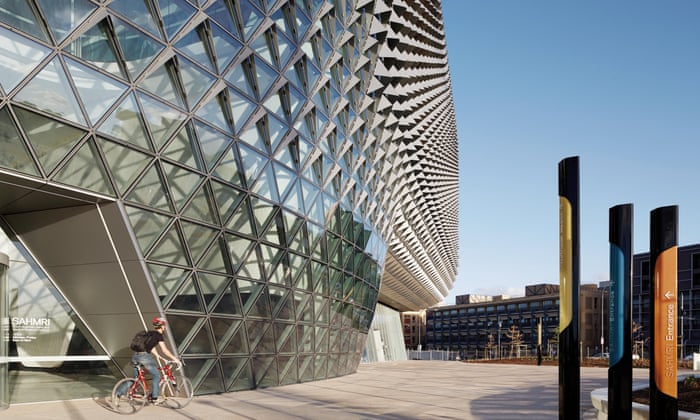 |
| South Australian Health & Medical Research Institute. Façade design aims to balance daylight level in the building. |
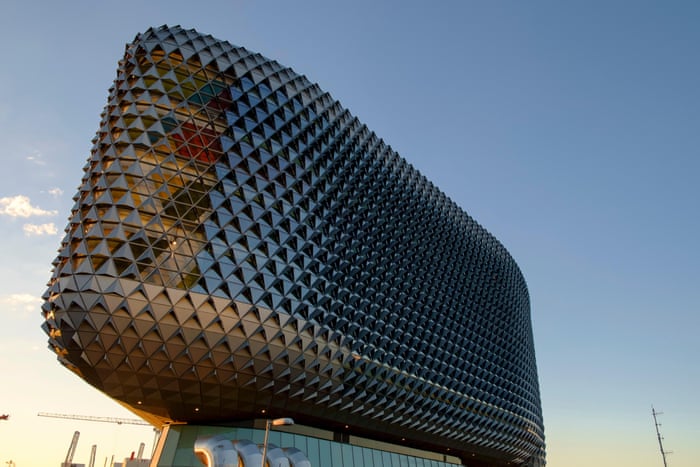 |
| Façade was inspired by the circadian rhythms studies. |
In terms of material selection, the structure is made of structural steel, which can span up to 40 meters without additional support. It therefore contains less embodied energy than aluminium systems.
The architects has also considered carefully about the programmatic arrangement in relation to façade design and building form, in order to optimise the thermal and lighting efficiency of the building.
All of these designs including the façade irregular sunshade design was made by parametric design programs, or as we all know, BIM. Integrating architectural design and computational programs can easily analyse up all the performances of the actual building at design stage. The designs are incredible in terms of their performance on sustainability, as well as building up a new landmark in Adelaide. Although it looks futuristic in form and shape, would it potentially become a trend in architecture in the coming future?
No matter what the answer is, SAHMRI has a profound impact on sustainable architecture in Australia. As architecture contributes heaps to environmental impact from built environment, it is significant to enhance the sustainable design in all buildings being designed for Australia in the future.
Resources:
http://www.theguardian.com/sustainable-business/2016/may/20/environmental-design-we-design-the-stuff-you-feel-not-the-stuff-you-see
http://wp.architecture.com.au/news-media/iconic-and-innovative-sahmri-stitches-up-the-competition-at-sa-architecture-awards/#sthash.JoSWGuap.dpbs
http://architectureau.com/articles/beyond-parametricism-transforming-the-city-with-sustainable-design/

No comments:
Post a Comment